
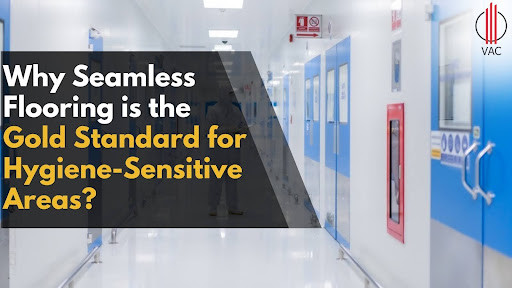
In industries where cleanliness is not just a preference but a legal requirement, the floor underfoot is crucial. In places like operating theaters, pharmaceutical cleanrooms, commercial kitchens, and food processing plants, the fight against contamination often starts at the ground level.
While traditional tile and vinyl flooring have worked for many years, modern facilities are quickly moving toward seamless flooring options. But why is a joint-free surface so much better for hygiene?
This guide examines the science behind hygienic flooring, the hidden risks of grout lines, and why materials like Epoxy and Polyurethane (PU) flooring are becoming the industry standard for preventing infections and ensuring cleanliness.
The Grout Problem: Where Bacteria Hides
To appreciate the benefits of seamless flooring, we need to first address the weaknesses of traditional tiling. While tiles are often non-porous, the grout lines connecting them are not.
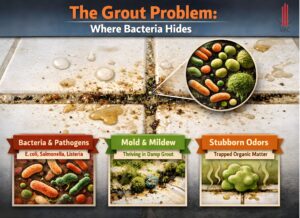
Grout is naturally porous. It acts like a tiny sponge, soaking up moisture, grease, and biological fluids. Over time, these recessed lines can turn into breeding grounds for:
- Bacteria and Pathogens: Such as E. coli, Salmonella, and Listeria.
- Mold and Mildew: Flourishing in the damp, dark corners of grout.
- Stubborn Odours: Caused by trapped organic matter that mopping cannot remove.
In a cleanliness-focused area like hospitals or a cleanroom in a factory, even a thorough wash-down can leave contaminants hiding in the joints. Seamless flooring removes this risk by creating a single, solid surface, effectively eliminating places where germs can hide.
Key Hygiene Benefits of Seamless Flooring
1. The Monolithic Surface Advantage
The main feature of seamless resin flooring is clear from the name: no seams, no joints, and no grout. When installed, materials like Epoxy or PU are poured as a liquid, leveling out on the substrate and curing into one solid sheet.
This forms a non-porous surface that resists liquids. Spills stay on the surface instead of soaking in, making cleaning completely effective. For facilities that follow HACCP (Hazard Analysis Critical Control Point) or GMP (Good Manufacturing Practice) standards, this level of impermeability is essential.
2. Resistance to Harsh Chemicals
Hygiene-sensitive areas undergo intense cleaning routines. Floors in hospitals and labs are often treated with:
- Industrial-grade disinfectants
- Bleach solutions
- Solvents and acids
Standard flooring can wear down, crack, or change color under these harsh chemicals. Chemical-resistant flooring, especially high-quality Epoxy and PU formulations, is designed to endure tough sanitizing processes without breaking down. This keeps the floor intact and helps prevent cracks where bacteria could enter.
3. Integral Cove Bases: The Wall-to-Floor Connection
One often-neglected area in facility cleanliness is the 90-degree angle where the floor meets the wall. Dust and bacteria tend to gather in that corner.
Seamless flooring allows for the installation of a cove base, where the floor coating slightly curves up the wall, creating a smooth transition. By removing that sharp corner, you prevent dirt buildup and make cleaning faster and more efficient.
4. Antimicrobial Additives
Modern resin flooring technology includes active hygiene protection. Many seamless systems can have antimicrobial additives, such as silver ions, built into the resin. These additives work continuously to inhibit the growth of bacteria and fungi on the floor, providing extra protection between cleaning sessions.
Epoxy vs. PU: Choosing the Right Seamless Flooring
Both types offer seamless cleanliness but meet slightly different needs.
Epoxy Flooring is best known for its hardness and durability. It works well in dry areas of pharmaceutical plants or hospital corridors where there’s heavy equipment traffic.
| Feature | Epoxy Flooring | Polyurethane (PU) Flooring |
| Best Suited | Heavy traffic, dry environments | Wet environments, thermal shock |
| Hardness | Very hard, rigid | Flexible, impact-absorbing |
| Chemical Resistance | Excellent (Acids/Alkalis) | Excellent (Lactic acids/Chemicals) |
| Ideal Setting | Warehouses, Pharma Labs, Hospitals | Commercial Kitchens, Food Processing |
PU Flooring (Polyurethane) has advantages due to its resistance to thermal shock. If you operate a commercial kitchen with hot ovens and freezers or use boiling water for cleaning, PU is the better choice since it expands and contracts without cracking.
A Note on Implementation
Achieving a truly hygienic floor requires skilled application. The substrate must be prepared properly to ensure the coating adheres correctly; otherwise, peeling may occur, leading to new hygiene concerns. Thus, specialized applicators are essential for this process.
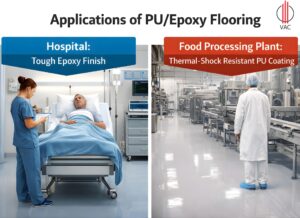
For example, VAC Buildcare focuses on customising Epoxy and PU flooring solutions for Indian industrial/commercial conditions. Whether it’s a busy hospital area needing a tough epoxy finish or a food processing plant requiring a thermal-shock resistant PU coating, their products, including the Floorcare series, meet high safety standards while ensuring durability.
Safety Meets Sanitation
Maintaining hygiene shouldn’t compromise safety. Smooth floors are easy to clean, but can become slippery when wet. Another major advantage of seamless resin flooring is its adaptability.
During installation, anti-slip materials can be added to the wet resin, giving traction for staff in medical booties or kitchen clogs. This significantly reduces the risk of slip-and-fall accidents, even in wet conditions. You can have a textured surface that provides grip but is also non-porous and simple to clean.
Conclusion: An Investment in Health
In today’s facility management landscape, flooring is more than just a structural need as it actively supports your hygiene efforts.
Switching to seamless flooring lowers cross-contamination risks, decreases maintenance costs, and helps meet strict health regulations. For hospitals, the pharmaceutical industry, and food sectors, it is simply the smartest choice for a safer, cleaner future.